
Healthy Relationships After Trauma: What's Truly Possible

Have you ever felt like your past relationship experiences (the complexity, the unpredictability, the pain) have created an invisible wall, making truly healthy relationships after trauma feel like a fantasy?
It’s a completely understandable feeling. When your foundational sense of safety has been disrupted by relational trauma, the prospect of letting someone new in can feel terrifying. You might find yourself caught in cycles of vigilance, self-doubt, or pulling away. But here is the critical truth we need to accept: healing does not mean you are destined to be alone. It means learning a new language of connection that prioritizes safety, reciprocity, and peace.
This final article in the "Healing from Relational Trauma" series will illuminate the path forward. We'll explore how to recognize the markers of a genuinely healthy connection, equip you with essential communication skills for survivors, and guide you toward building the secure attachment you deserve as an adult.
The Radical Shift from Turbulence to Trust
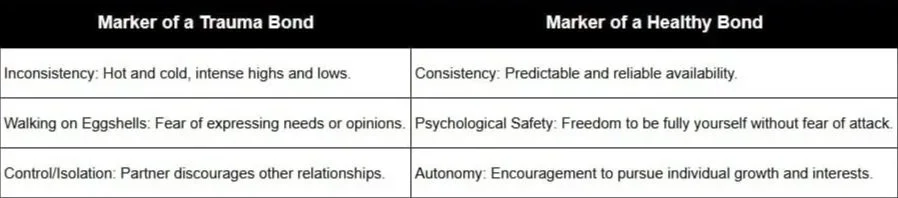
After experiencing relational trauma, your internal alarm system is highly sensitive, often mistaking safety for danger and intense drama for "connection." The first step in finding healthy relationships after trauma is redefining what a secure partnership actually looks like. It's often much quieter and less dramatic than what you’re used to.
A genuinely healthy relationship is built on a foundation of secure attachment—a sense of reliable safety and predictable responsiveness. This provides a "secure base" from which you can explore the world, knowing you have a safe place to return to.
According to the groundbreaking work in Attached, individuals who thrive in relationships typically have a secure attachment style (Levine & Heller, 2010). They are comfortable with closeness, don't worry excessively about their partner's availability, and communicate their needs directly.
Essential Communication Skills for Trauma Survivors

Speaking Your Truth in a Safe Space
One of the greatest challenges for trauma survivors is communication. You might fear conflict, shut down, or escalate conversations due to emotional flashbacks. However, developing specific communication skills for trauma survivors is key to establishing and maintaining healthy relationships after trauma.
One of the most effective strategies is the Imago Dialogue, a structured method developed by Harville Hendrix, author of Getting the Love You Want. This technique slows down communication and ensures both partners feel heard, which is crucial when navigating the sensitive dynamics that follow trauma.
Mirroring: This is the foundation. When your partner speaks, you must repeat back what you heard exactly, without interruption or interpretation: "If I heard you correctly, you feel frustrated when I am late because you interpret it as a sign that I don't prioritize you. Did I get that?" This ensures validation and reduces misinterpretation.
Validation: After mirroring, acknowledge the logic of your partner’s feeling, even if you don’t agree with it. "That makes sense. Given your past experiences, I can see why my lateness would bring up feelings of being unimportant."
Empathy: Offer a genuine guess about what they might be feeling. "I imagine you must feel hurt and maybe a little anxious in those moments."
Practicing these steps shifts the focus from winning an argument to mutual understanding, fundamentally strengthening secure attachment adult bonds.
Building Secure Attachment as an Adult

The Power of Earned Security
You might believe that your attachment style is fixed, but this is a myth. As adults, we can develop "Earned Secure Attachment," meaning we consciously cultivate the internal stability and relational skills that were missing in childhood. This is perhaps the most empowering truth in healing from relational trauma.
To foster secure attachment as an adult:
Develop Self-Awareness: Identify your trauma triggers. Know the difference between a present threat and an emotional flashback. When triggered, name the feeling and use grounding techniques before engaging with your partner.
Practice Transparency: A healthy partner doesn't need you to be perfect; they need you to be honest. Learn to articulate your vulnerability: "I'm feeling triggered right now and I need five minutes to calm my body, but I promise I'll come back to this conversation."
Choose Responsive Partners: A securely attached partner is one who will reliably show up for the repair process. They don't dismiss your feelings; they meet your distress with curiosity and care. Consistent experiences of successful repair—where conflict is resolved and connection is restored—are what rebuilds your inner capacity for security.

You Are Capable of Deep, Quiet Love
We started by asking if healthy relationships after trauma were possible. The answer is a resounding yes. By consciously recognizing secure patterns, skillfully communicating your needs, and committing to the process of earning secure attachment, you can step out of the turbulence of the past and into the quiet strength of genuine connection.
This journey requires courage, but every boundary you set and every vulnerable truth you share is an act of profound self-love. You are not just surviving; you are Flourishing Gracefully into the secure, thriving partner you were always meant to be.
Recommended Reading
Attached: The New Science of Adult Attachment and How It Can Help You Find—and Keep—Love by Amir Levine and Rachel Heller.
This book breaks down the three main adult attachment styles (Anxious, Avoidant, and Secure) and offers practical, science-backed advice for finding compatibility and navigating relationship challenges.
Getting the Love You Want: A Guide for Couples by Harville Hendrix.
An essential guide for understanding how childhood experiences are replayed in adult relationships, providing the transformative Imago Dialogue technique to turn conflict into profound growth and connection.
The Body Keeps the Score: Brain, Mind, and Body in the Healing of Trauma by Bessel van der Kolk.
While not strictly about relationships, this seminal work helps readers understand the physiological impact of trauma, which is crucial context for managing triggers and developing emotional regulation within a partnership.
Sometimes, the safest place to begin building these skills is with professional support. If you are ready to heal the impact of past relationships and learn how to show up securely and authentically in your current or future partnerships, our relationship therapy services can guide you every step of the way.
Book your first session and take the step toward the secure connection you deserve.
➡️www.flourish-gracefully.com